Politics
Part of: Billionaire ClassWhat Socialism Really Looks Like (Spoiler: It's Not Stalin)
by Rob C.
With the decisive win by Zorhan Mamdani in New York’s Democratic primary, it’s time we finally have an honest conversation about what “socialism” actually means — and why so many Americans are embracing it.
No, it’s not the boogeyman your uncle on Facebook keeps yelling about. It's not gulags, breadlines, or secret police coming to take your lawnmower. (That’s the Trump administration). What Mamdani represents — and what the word socialism actually points to in a modern American context — is something far simpler: a government that serves people, not corporations.
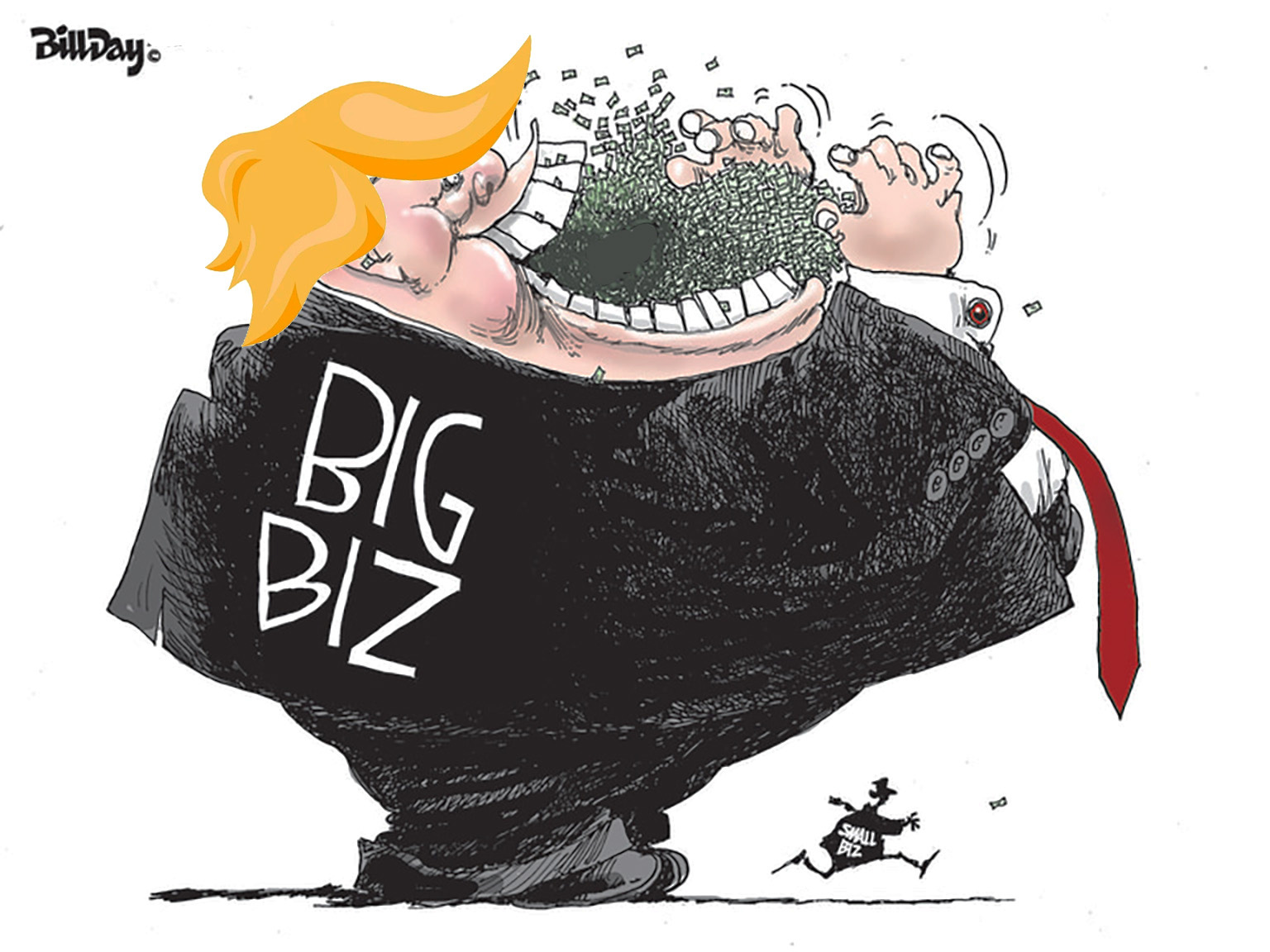
In my book Democracy for Sale: How Corporate Greed is Corrupting Democracy and Endangering the Planet, I laid out the systemic rot at the heart of American capitalism. It’s not that capitalism itself is evil — it’s that it’s been hijacked by billionaires and corporations, warped into something that no longer rewards innovation or effort, but instead rewards consolidation, exploitation, and political manipulation.
Let’s break this down.
Capitalism vs. Communism vs. Socialism — The Real Story
Let’s stop letting Fox News define our political vocabulary.
In Democracy for Sale, I break down what these systems are supposed to mean — and what they’ve become in the real world.
Capitalism, in theory, is about free markets, competition, and individual opportunity. Great ideas rise. Bad ones fail. Everyone gets a fair shot. That’s the myth. But in reality, American capitalism has been captured — not by entrepreneurs, but by monopolies, hedge funds, and billionaire dynasties. We don’t have a free market. We have a rigged market, where political influence is bought, and profits are privatized while risks are socialized.
It’s capitalism — but only for the poor. For the wealthy, it’s socialism in disguise: bailouts, tax loopholes, subsidies, and deregulation on demand. That’s not innovation. That’s extraction.
That’s corporate welfare for the ruling class.
Communism, as implemented in the 20th century, became authoritarianism disguised as equality. In theory, it meant shared ownership of resources. In practice, it meant centralized control, surveillance, and repression. That’s not democratic socialism — it’s dictatorship in a red suit.
Now, democratic socialism, or simply “social democracy” as it functions in most developed nations, is neither anti-capitalist nor anti-freedom. It’s about protecting people from the worst excesses of capitalism. It means you don’t die if you can’t afford insulin. It means corporations don’t write the laws that regulate them. It means workers have a voice. It means democracy in the workplace, not just the ballot box.
That’s what Zorhan Mamdani stands for — and what the corporate media refuses to understand.
Democratic socialism doesn’t eliminate markets. It simply demands that the wealth generated by those markets serves the public good — not just a handful of billionaires with yachts the size of aircraft carriers. It’s about public goods — affordable housing, healthcare, transit, education — being guaranteed rights in the richest country on Earth.
If that’s radical, maybe we need to redefine “normal.”
How the Corporate Democrats Lost the Plot
The Democratic Party didn’t lose touch with average Americans because of trans rights or drag queen story hour. They lost them when they sold out to Wall Street.
Bill Clinton opened the floodgates in the '90s with his embrace of neo-liberalism — that seductive idea that markets, not governments, should determine everything from healthcare to housing. He gutted welfare, deregulated banks, and helped turn the party of the New Deal into the party of new donors.
Barack Obama — for all his soaring rhetoric — stocked his administration with Goldman Sachs alumni and bailed out the banks instead of the homeowners. And Hillary Clinton? She gave $200,000 speeches to Wall Street while talking about breaking up big banks. Donald Trump didn’t win because he told the truth — but because he knew where the Democrats were lying.
Zorhan Mamdani’s win is a rebuke of that hypocrisy.
It’s a reminder that the working class — Black, white, brown, immigrant, union, gig worker — is tired of being gaslit by a party that talks about equality while cashing checks from Comcast and Chevron.
The Policies Are Popular — And Smart
Let’s look at what Mamdani is actually proposing:
• Affordable rent – Because people shouldn’t have to work 3 jobs to keep a roof over their heads.
• Free public transit – Because mobility is freedom and clean transportation is public health.
• Higher minimum wages – Because poverty wages are a policy choice.
None of these are radical. In fact, poll after poll shows most Americans support taxing the rich, raising wages, and expanding public services. These aren’t pipe dreams — they’re economically sound policies backed by research and results.
Investing in people generates returns. Food stamps, housing vouchers, public transit — these all stimulate the economy far more effectively than tax cuts for billionaires who hoard their wealth offshore.
Want to actually make America great? Tax the ultra-wealthy, break up monopolies, and start putting working people back at the center of our political economy.
A Party at a Crossroads
The Democratic Party is at a turning point. Either it continues to serve its corporate donors — and slowly dies — or it listens to the growing progressive movement demanding a government for the many, not the few.
Mamdani’s victory wasn’t a fluke. It’s the future knocking on the door of a party that’s spent too long polishing its brand and forgetting its base.
And if the party doesn’t open that door? Someone else will.